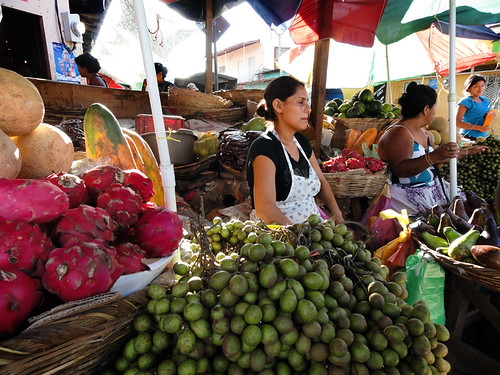
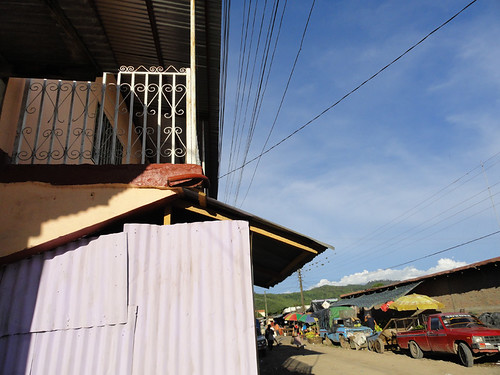
While in Esteli, Art of Solidarity participants worked with VIMAU to create four video documentaries.
The Process
The Process from
amartray on
Vimeo.
The Process documents cross-cultural artistic collaborations between North American and Nicaraguan artists. This year's Art of Solidarity participants traveled to Nicaragua to work with a collective of muralists and a group of video documentarians. After three years of collaboration, AOS participants document their collaborations and how they are able to use art to bridge language and cultural differences.
Por que somos lo que somos
Por que Somos lo que Somos from
amartray on
Vimeo.
Estelí is Nicaragua’s third largest city, located in the north, right on the Pan-American Highway. Known for its tobacco production, murals, and pleasant climate, Estelí has a rich archeological, social, and political history. Most Estelians remember the role their city played in the revolution but few know the origins of the city itself. Villa Vieja tells the story of how Estelí was founded. Located about 3 kilometers east of the city center lies a place called Villa Vieja, the place where the founders of Estelí first inhabited.
Con las manos: la industria tabacalera de Esteli, Nicaragua
Con las Manos de Esteli from
amartray on
Vimeo.
Con las manos: la industria tabacalera de Esteli, Nicaragua (With the Hands: The Tobacco Industry in Esteli, Nicaragua) illustrates the impact of the tobacco industry in the department of Esteli, Nicaragua. Con las manos features interviews with a variety of workers from several factories, many who began working in the industry at a young age. Their stories reveal the impact of the tobacco industry on their personal lives and that of the surrounding community. Though the factories provide jobs and stability, there are concerns regarding health conditions and wages. For many, it is a simply a means to expand educational and career opportunities.
Estelianas
Estelinas from
amartray on
Vimeo.
Estelianas is an exploration into what life is like for women living in Esteli, Nicaragua. Five different women share their experiences and perspectives on work, marriage, school, and family. Through their stories the realities of women’s roles in Esteli’s past and present are explored. Within these testimonies the extraordinary resilience and sincerity of Estelian women come to light. The culmination is an optimistic look towards the future and the ever-continuing progress of women’s equality in Esteli, Nicaragua, and around the world.
The preceding projects are collaborations between North American artists and VIMAU Productions of Esteli, Nicaragua through the Art of Solidarity- a cultural exchange study abroad program of the Maryland Institute College of Art (MICA) in Baltimore, Maryland.
In addition to creating four documentaries in Esteli, a small group of Art of Solidarity participants worked with youths in Limay to create a fictional film about drug use in their town.
El Mundo de las Drogas
El Mundo de las Drogas from
amartray on
Vimeo.
El Mundo de las Drogas is the story of two young brothers growing up in the town of Limay, Nicaragua. Struggling with the low wages and long hours of working in the fields, lack of support from their family, and lack of alternative opportunities to improve themselves, they turn to selling drugs as a means of making quick and easy money. They quickly fall into a cycle of addiction and crime that leads to a tragic ending.
This project was a collaboration between North American artists and high school students from the Instituto de Ruben Dario in Limay, Nicaragua, through the Art of Solidarity- a study abroad program of the Maryland Institute College of Art (MICA) in Baltimore, Maryland. Through a week of workshops students wrote, produced and edited the project with the guidance of teaching artists from MICA.


 It is with great pleasure to invite all artists regardless of language, lifestyle or belief system to join us this summer for 5 amazing weeks in the heart of Central America, sharing your talents with other socially motivated thinkers only 1902 miles or 3060 kilometros to the south (pass Mexico, wave to the Caribbean, and make a left after the Honduran border).
 First, I invite you to an amazing photography exhibition from all of the 2010 muralists and videographers at the Bohemian Coffee House this month until mid March. Our opening reception with local Nicaraguan poet, Lloyd Brooks, and 2010 video shorts will premiere! From 7-9:30pm. FREE! City Paper/Baltimore Weekly